

Publications
Community Conversations: Living well with long-term conditions
24 November 2026
Here at HCCA, we regularly host ‘Community Conversation’ events to answer common health questions by bringing a range of subject matter experts together to speak on a chosen health topic. We invite community members along for morning or afternoon tea. Participants sit at tables of six and listen to each of the speakers, who rotate around the room for 15-minute Q&A sessions at each table.
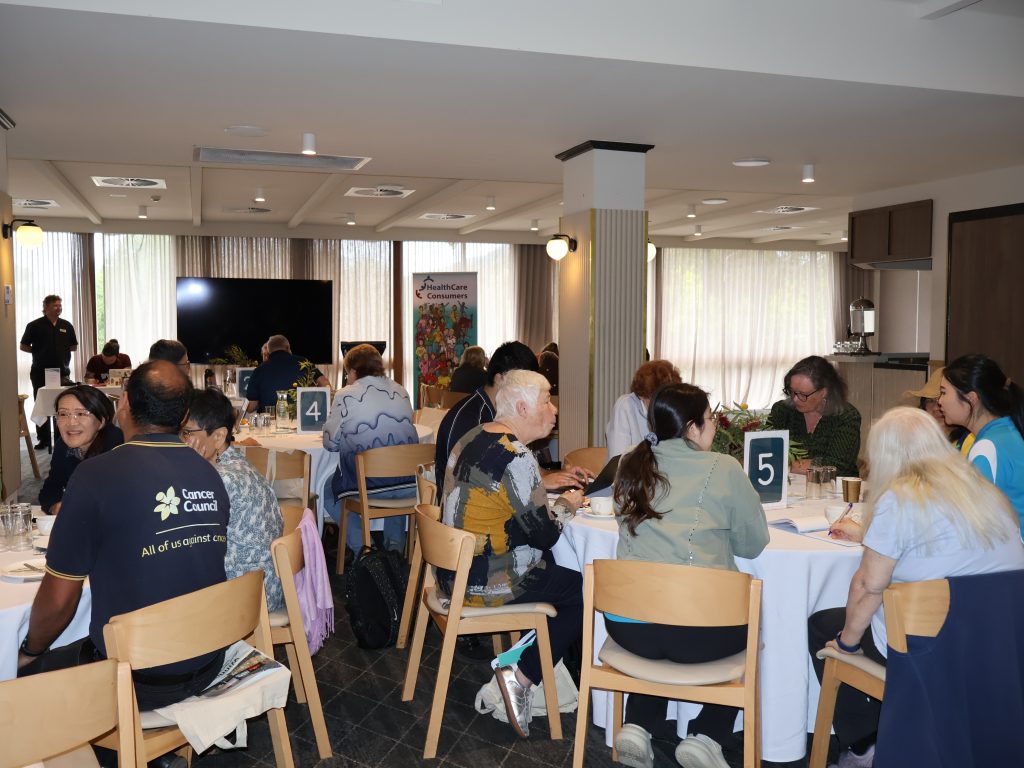
For our latest Community Conversation, we wanted to answer the question:
“What allied health services and supports are available for people living with long-term conditions in Canberra?”
Almost 85% of people in the ACT are living with a long-term health condition, and 50% of the population, or every second person, has a chronic health condition¹.
This means a lot of people in our Canberra community are looking for ongoing health services and support beyond what GPs and hospitals can offer.
So, what experts did we bring together? And what useful takeaways did they have for our participants?
Dylan, Exercise Physiologist at EQUIPD Allied Health Community Gym
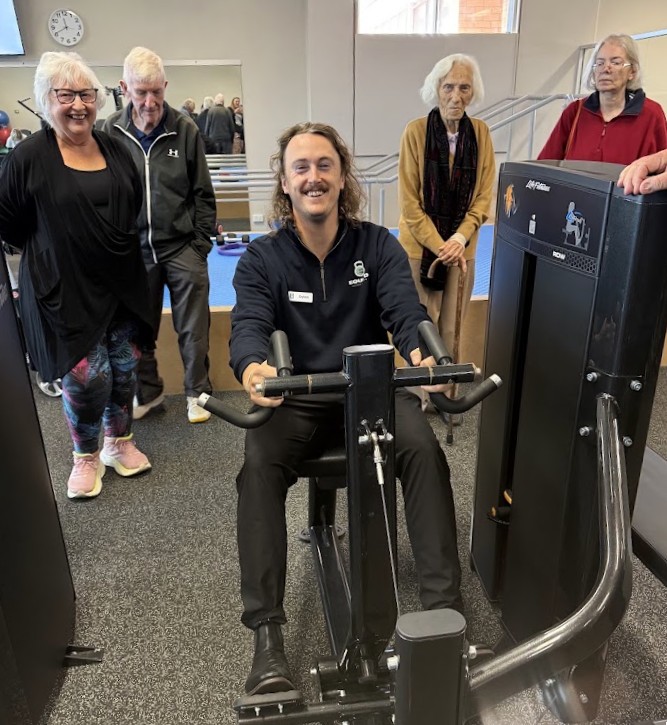 Dylan talked about how exercise physiologists work in the ‘prescription space’. They want to ‘prescribe’ the right exercise for individuals to “empower them on their exercise journey”, rather than perpetuating the all-too-common experience of consumers being pressured into doing more and more exercise in the name of their health.
Dylan candidly admitted that yes… “exercise can suck sometimes… and it can be really hard to stay motivated!”
This is why the team at EQUIPD are not in the gym just to ‘watch people exercise’. They offer initial one-on-one sessions and ongoing support to people.
They aim to:
- Get to know you,
- Plan and map out what you want to achieve,
- Make exercise work for you and your lifestyle, and
- Be there to support you if you want to put your plan into action in a friendly, community-based gym and/or group class at the Chifley Health Hub.
Dylan encourages everyone with a long-term health condition to seek out a local exercise physiologist in your area and explore how to bring enjoyable, achievable movement and exercise into your life in a way that works (and will continue working) for you.
The EQUIPD Allied Health and Community Gym in Chifley offers the one-on-one start up session for $125. You can claim some of this back on Medicare (if you have a chronic condition management plan) or private health insurance (if you have cover).
It then costs $22 per week to access the gym anytime (between 7am and 6pm Monday-Friday or 7am to 1pm Saturday) and go to as many group classes as you like. The group classes range from meditation and low-energy strength activities to functional fitness, strength for life, Pilates, and high-energy classes. There is something for every level. There is always an exercise physiologist or sport scientist on the gym floor to help with equipment, understand activities, adjust plans and make changes as needed.
Exercise is a commonly requested intervention for people living with health conditions. Finding a way to make it work for you and your lifestyle in a sustainable way is what Dylan and exercise physiology is all about.
More information on EQUIPD is on their website. You can also contact Dylan and the team anytime via email at [email protected].
Chelsea, Program Coordinator of the Canberra Health Services ‘Take Control, Live Well’ Program
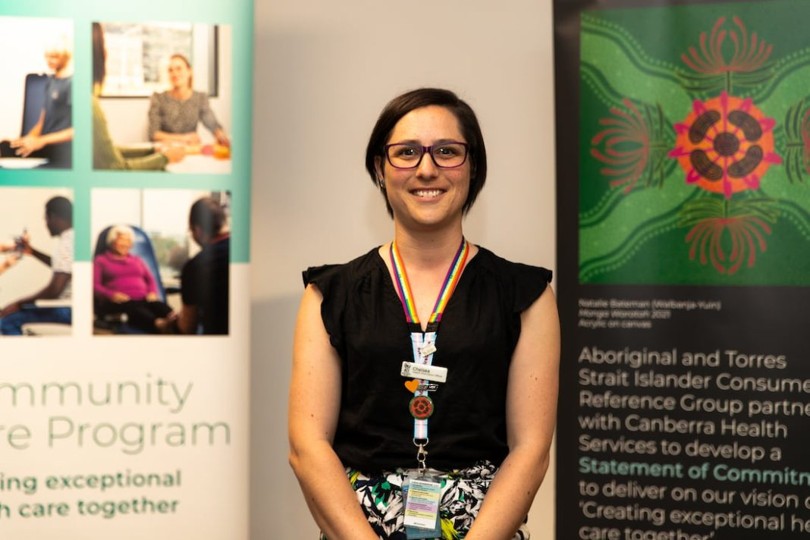
Chelsea is a Health Promotions Officer from the Canberra Health Services (CHS), which is the public health provider of our hospitals and community health centres. Chelsea is part of the Community Care team, who offer a great course for people living with any chronic condition. It brings people together to map out their goals, how they want to manage their health well at home, and build their self-advocacy and self-management skills when interacting with the health system.
The ‘Take Control, Live Well’ program is open to anyone over 18 years old with any chronic health condition. It runs as 3 x 2-hour sessions – once per week, for three weeks. You can attend in person or online. In-person sessions are offered at different community health centres located at Phillip, Tuggeranong, Belconnen and others around Canberra.
It’s in a group setting, so you will be with other peers who have long term conditions. You don’t have to give any specifics about your health if you don’t want to. Everyone is there to learn some skills, set some goals, and it’s always more fun to do these types of activities with other like-minded participants.
This course looks at bigger picture of health conditions. It is not just another ‘eat more veggies, do more exercise’ type class. The facilitators guide you to explore “what impact does your condition have on you, and your lifestyle?”. This includes the impacts on your emotions, your social activities, family time, your mental health, your physical abilities and your work.
The course is not about any specific health condition. It’s about the things health conditions have in common, like the way they impact your life. It is about helping you to map out practical and achievable goals to live better, while building your confidence and skills to advocate for yourself in the health system.
We highly recommend giving this free course a go in 2027!
To get on the list for the 2027 dates, please email your details and interest in ‘Take Control, Live Well’ to [email protected] or call the Canberra Health Intake phone line on 5124 9977 and ask to be put on the list for ‘Take Control, Live Well’ dates in 2027.
There is more information about this course on the CHS website.
Ash, Dietitian and Support Coordinator at Cancer Council ACT

Ash is a practising dietitian and a Support Coordinator at Cancer Council ACT. He combines his knowledge of nutrition and wellbeing to help people and their carers navigate through cancer. However, his knowledge and skills apply across the broad range of health conditions because what/when/how we eat has a great impact on our overall health and wellbeing.
A current concern for consumers around nutrition is the incredible amount of conflicting information that is available online and on social media. We are faced with a constant stream of wellbeing information these days, and it can be so confusing to figure out what is good nutrition information and what is potentially harmful clickbait!
We had a question at the table about protein: “Should we be drinking protein shakes and increasing out protein intake?“
Ash answered that consuming excess amounts of protein can have a negative impact on your kidneys. If we eat a normal balanced diet, we should be getting enough protein without needing to supplement. He uses the ‘hand serving guide’ where one serve of protein looks like:
- Red meat or tofu/tempeh should be the size of your palm,
- Chicken is ¾ of your hand,
- Fish is a whole hand, with the added benefits of omega 3 for heart and joint health, and
- Legumes: 1-2 cups.
We should be aiming for three to five serves of protein per day. He said people have a fear of carbohydrates and fats these days because of all the negative publicity they have received over the years, so the current focus on protein intake seems like a safe topic for people to talk about. He added that a good serve of protein can make you feel full for longer, and this can be helpful.
His overall message though was not to put too much pressure on ourselves over food. Eat in moderation, have occasional treats – they are not the end of the world, and enjoy food!
There is a range of fact sheets available on the Dietitians Australia website. You can search for specific conditions or specific group advice on diet and nutrition.
Ash also has a series of podcasts on cancer and nutrition available at the Cancer Council website.
Diane, Health Programs Officer at Asthma Australia
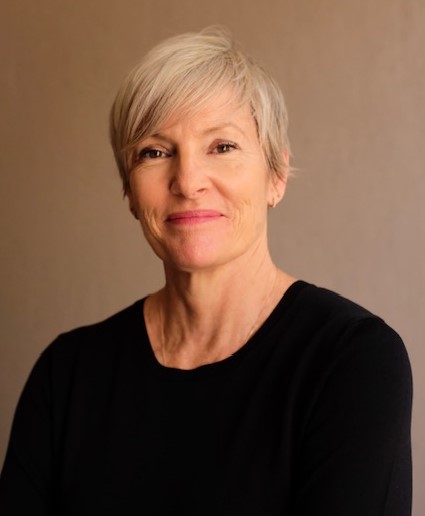
Diane works with the ACT branch of Asthma Australia as the Health Programs Officer. She talked to the tables about how Asthma Australia can help people with asthma education, home management and medications for asthma, and asthma planning.
For residents of Canberra, the pollen and dry air make asthma more common here compared to the national average. Uncontrolled asthma can be debilitating and life-threatening for people, so getting in control of everyday prevention and relief of asthma symptoms can make a real difference. It can allow people to live full uninhibited lives!
If you need support with managing asthma at home, Asthma Australia is there for you. There is a national helpline with asthma educators on call ready to help you at a time convenient to you. They can help you with asthma medicines and how to use them, asthma first aid, how to care for someone with asthma and what to ask your pharmacist or doctor.
Video on what the asthma helpline can offer:
Diane also talked about how asthma can start up at any time of life and that more older women were reporting asthma for the first time in their lives during or after menopause. There is some research going on now about how hormones might affect the presentation and symptoms of asthma for women. You can read about this on their website and watch a video below.
Diane also wanted to remind everyone that using asthma inhalers with a spacer is another practical way to make sure the medication is taken evenly and consistently.
Asthma Australia has a great webpage on the different medicines, techniques and devices you can check out.
There are also asthma resources translated into eleven different languages at this Asthma Australia webpage.
Let’s all breathe better!
Xiaoyan, Physiotherapist at Summit Health Solutions

Xiaoyan and the team from Summit Health Solutions came to tell us about the ‘Summit Strong Program’.
The research over time shows that the risks associated with frailty and falls at home can quickly turn into long hospital stays, rapid hospital de-conditioning (which is a loss of strength and muscle tone) and then longer-term problems with mobility and being able to live at home safely. It’s not an uncommon story for someone to fall over at home and hurt themselves, end up in hospital with complications, and then have to consider options like residential aged care or significantly more support to live independently at home again.
The Summit Strong Program is funded by the Australian Government, through Capital Health Network as part of the early intervention initiative for healthy aging. This program is designed to help people focus on their strength and mobility at home before they become at risk of frailty or falling over. The program is designed for ‘pre-frail’ people over the age of 65 (or 50 for Aboriginal and Torres Strait Islanders) who might be noticing a loss of strength, feeling less steady on their feet, reduced balance, or difficulty recovering from illness or health conditions.
The program runs for 12 weeks and is completely free. There is a two minute survey on the Summit Health Solutions website to check your eligibility: FRAILTY Quiz – Summit Health Solutions Australia, but you have to be over 65 years old and at risk of becoming frail. The program starts with an initial in-person assessment by a physiotherapist in Deakin to work together to set up a plan.
This initial session is then followed by weekly home visits by an allied health assistant to take people through their exercises and strength programs. There are additional telehealth exercise group sessions available to participants run on Tuesdays and Thursdays online. The sessions go for an hour with breaks.
After the 12 weeks, the team will help you transition to ongoing suitable exercise or movement activities in the community. Participants can continue attending the free online group classes.
This program sounds like a great and low-cost way to get started in your homes before transitioning to something like EQUIPD Allied Health and Community Gym to continue to keep up your strength, mobility and activity levels.
Frailty can creep up on you gradually, affecting your abilities before you notice your functionality going down. Strength and mobility tend to operate on a ‘use it or lose it’ basis, so the message from Summit was to get in early to keep your body strong.
Janine, Director of RSI and Overuse Injury Association
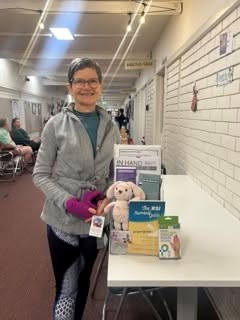
Janine is the Director of the Repetitive Strain Injury (RSI) and Occupational Overuse Syndrome (OOS) Association in Canberra. She told us about the many different forms of RSI. In fact, there are over 100 types of repetitive strain and overuse injuries. These can affect your lifestyle and can be triggered by things like gardening, bending, or work-related activities like using tools or typing. Janine is upbeat about regaining strength, reducing pain and regaining movement. She believes that “you can do something about most things” even if that something is just a small change.
She told us “blood flow is king” and sometimes the key to getting movement and strength back into an area of the body is to get the blood circulation and flow back on track. She is a physical trainer and is passionate about finding simple strategies that can really make a difference. She encouraged us all to “find our five minutes” in a day to move and restore circulation because it can make a world of difference.
RSIACT has an excellent website with tips and tricks to help you live well with RSI and OOS. There are resources and guides on all aspects of RSI and OOS, including how to manage RSI, how to choose a good doctor to help you, advice on living with RSI in your activities and hobbies and how it might impact your emotional wellbeing.
Check out the website and join the newsletter if you want to hear from Janine!
RSI & Overuse Injury Association of the ACT
Infosheets and downloads – RSI & Overuse Injury Association of the ACT
Our key message from this Community Conversation
“You don’t have to do it all, and you don’t have to do it alone.”
If there was one message that resonated across all our Community Conversation speakers, it was that living well with a long-term health condition isn’t about finding a single magic solution or making lots of changes overnight. It is about finding the right support, building on what works for you, and making small, achievable changes that fit into your life.
Whether it’s finding a way to move that you actually enjoy, getting trusted advice and support to manage your condition at home, making sense of all the ‘wellbeing’ information available to us, building your strength and confidence to move about in the community, or finding practical ways to manage pain, there are people and services in Canberra who can help.
At HCCA, we believe everyone deserves to feel informed, supported and empowered to make decisions about their health and wellbeing. Sometimes, knowing what’s available, and who you can turn to, is a really good place to start.
Your health journey is your own. You deserve support that works for you.
——————————————————————————–
Contact details and further information
1. EQUIPD Allied Health and Community Gym
Contact: Dylan Grubb, Director
Address: Chifley Health Hub, 70 Maclaurin Crescent, Chifley ACT
- Email: [email protected]
- Website: EQUIPD Allied Health – Community Gym, Canberra
- Phone: (02) 5135 6600
- Facebook: EQUIPD Allied Health
It’s $22 a week to join the Chifley Gym. It’s a great set up with an Exercise Physiologist or Sports Scientist on the floor at all times. You can do an initial plan with an Exercise Physiologist one-on-one and then continue with the gym or group classes.
EQUIPD is a provider of the ‘Strength for Life’ program.
2. Canberra Health Services – Take Control, Live Well
Contact: Chelsea Hillenaar
- Email: [email protected]
- Website: Take Control – Live Well Program – Canberra Health Services
- Phone: Central Health Intake – (02) 5124 9977
This is a self-management program for any chronic conditions (in person or online). It takes a ‘higher level’ approach to how health conditions affect people’s lives, setting goals and working out ways to manage well at home.
Next intake will be the start of 2027.
3. Cancer Council ACT
Contact: Ash Saxena, Support Coordinator and Practising Dietitian
Address: Unit 1 (The Annex), 173 Strickland Crescent, Deakin ACT 2600
- Email: [email protected]
- Website: Support – Cancer Council ACT
- Phone: (02) 6257 9999
- Facebook: Cancer Council ACT
Ash can talk to people impacted by cancer (including carers) about nutrition and keeping well. He is also a practicing dietician and can talk to people about diet and preventative health and nutrition.
Listen to his podcast series: Cancer & Nutrition – Cancer Council ACT.
4. Asthma Australia
Contact: Diane Percy, Health Programs Officer
Address: Chifley Health Hub, 70 Maclaurin Crescent, Chifley ACT
- Email: [email protected]
- Website: Asthma Australia
- ACT office phone: (02) 6109 9401
- National Asthma Helpline: 1800 278 462
- Facebook: Asthma Australia
Asthma Australia has a phone to talk to Asthma Educators about managing any aspect of asthma – from medication, devices, resources, training and help with talking to GPs and specialists. Get in touch!
5. Summit Health Solutions
Contact: Xiaoyan (Yan) Zhang, Physiotherapist
Address: Suite 2, Ground Floor, 4 Campion Street, Deakin ACT 2600
- Email: [email protected]
- Website: Summit Strong – Summit Health Solutions
- Phone: 1300 315 315
- Facebook: Summit Health Solutions
The free 12-week Summit Strong Program supports eligible people at risk of frailty through an initial physiotherapy assessment, weekly home visits from an allied health assistant and online group exercise sessions. Initial appointment in Deakin to plan.
6. RSI and Overuse Injury Association of the ACT
Contact: Janine Robertson, Director
Address: Building 1, Pearce Community Centre, Pearce ACT 2607
- Email: [email protected]
- Website: RSI & Overuse Injury Association of the ACT
- Phone: 0459 906 204
- Facebook: RSIACT
A great range of info sheets available on the website for managing RSI and everyday tasks: Infosheets – RSIACT.
Living with RSI action plan: Living with RSI – RSIACT